When your firm implemented DealCloud, the configuration was built around the firm you were at that moment. A certain fund size. A certain team. A certain way of moving deals from sourcing to close.
Private equity firms do not stand still. Since go-live, you may have raised a new fund, added platform and add-on activity, grown the deal team, or formalized processes that used to live in someone’s head. The platform that fit perfectly on day one is now running a firm that looks different.
That is not a failure of the implementation. It is what success looks like. But it does mean the configuration deserves to catch up with the firm. Across thousands of DealCloud projects, these are the three signs we see most often at buy-side PE firms a few years in.
1. Your Deal Team Spends Too Many Clicks on Routine Work
The symptom is easy to spot. An associate needs to log a management meeting and update a deal stage, and doing it properly means navigating several pages and re-entering details the system should already know. So updates get batched for Friday afternoon, or skipped, and the pipeline your partners review reflects last week more than this one.
The cause usually is not the platform. It is that the original configuration was built around your original workflow, and as the process evolved, workarounds accumulated on top of it. Left alone, this is how analysts end up as the firm’s de facto platform admins.
The fix is a focused workflow review:
- Streamline page layouts so the fields a deal team touches daily live on one screen, not four.
- Use conditional fields so people only see what applies to their deal type or stage.
- Automate the downstream updates, so changing a deal stage triggers the rest instead of requiring it.
A routine that took ten clicks becomes one click, and the platform handles the rest. When capturing activity is easier than skipping it, adoption stops being a management problem.
2. Monday Reporting Takes Longer Than the Monday Meeting
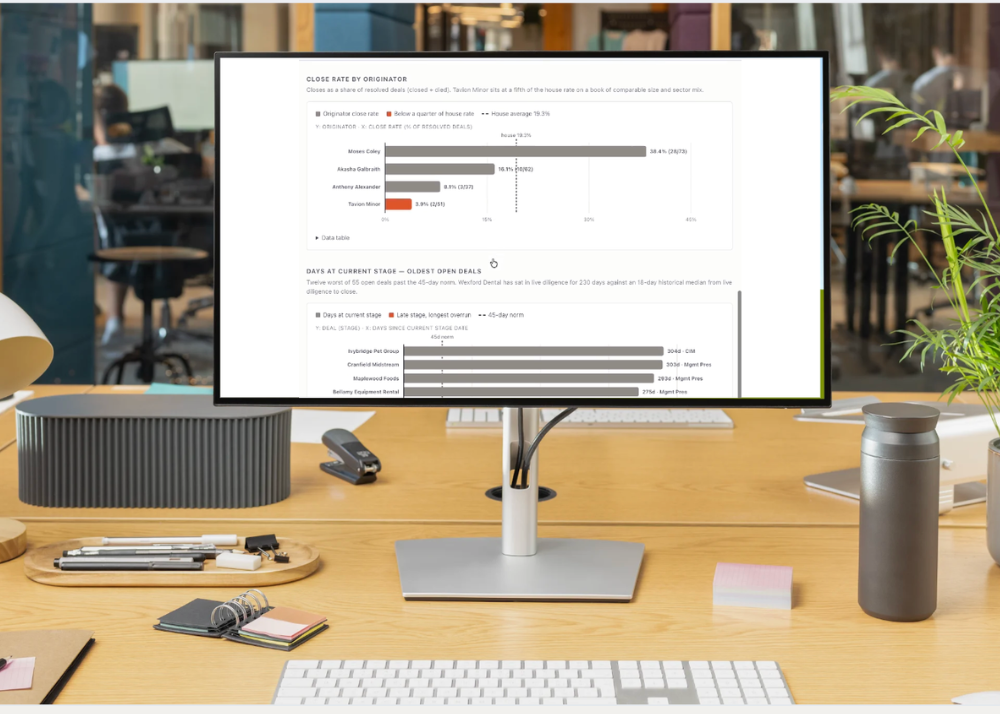
If your weekly pipeline report involves someone exporting data, reformatting it, and checking the numbers before it goes out, the report has a reliability problem. And when a partner questions a figure in the meeting, trust in every future report erodes a little more.
Templated reports solve this. Built once, validated once, and pulling live data every time, a templated report does not need to be checked before it goes out because it is right by construction. The same approach works for the weekly pipeline view, the monthly portfolio review, and quarter-end outputs headed to LPs.
The time savings are real, but the bigger win is that the meeting starts with everyone trusting the numbers.
3. You Trust Your Instincts More Than Your Data
Every firm, a few years into any CRM, accumulates some drift. The same portfolio-company CFO appears three times across two funds and a co-invest vehicle. Key fields sit blank on records nobody owns. Firmographics reflect a company’s headcount from two years ago.
Individually, these are annoyances. Collectively, they are the reason a partner double-checks the system against their own memory, which defeats the purpose of having a system.
Getting ahead of it takes three things:
- Visibility. A data stewardship dashboard surfaces duplicates, blank required fields, and stale records, so hygiene becomes a managed process instead of an occasional cleanup project.
- Better inputs. DataCortex integrations to providers like PitchBook and Preqin keep company and contact records populated and current automatically.
- A faster path through the backlog. AI-assisted cleanup, guided by a consultant who knows your taxonomy, works through years of drift far faster than manual review.
None of this is a re-implementation
Each of these is a focused tuning engagement measured in weeks, not a rebuild. The heavy lifting of implementation is behind you. What is ahead is making the platform fit the firm you have become.
A DealCloud tune-up is not an admission that something went wrong. It is what growing firms do.
If any of these three sounds familiar, we are glad to discuss your DealCloud optimization for private equity project. Reach out.